About
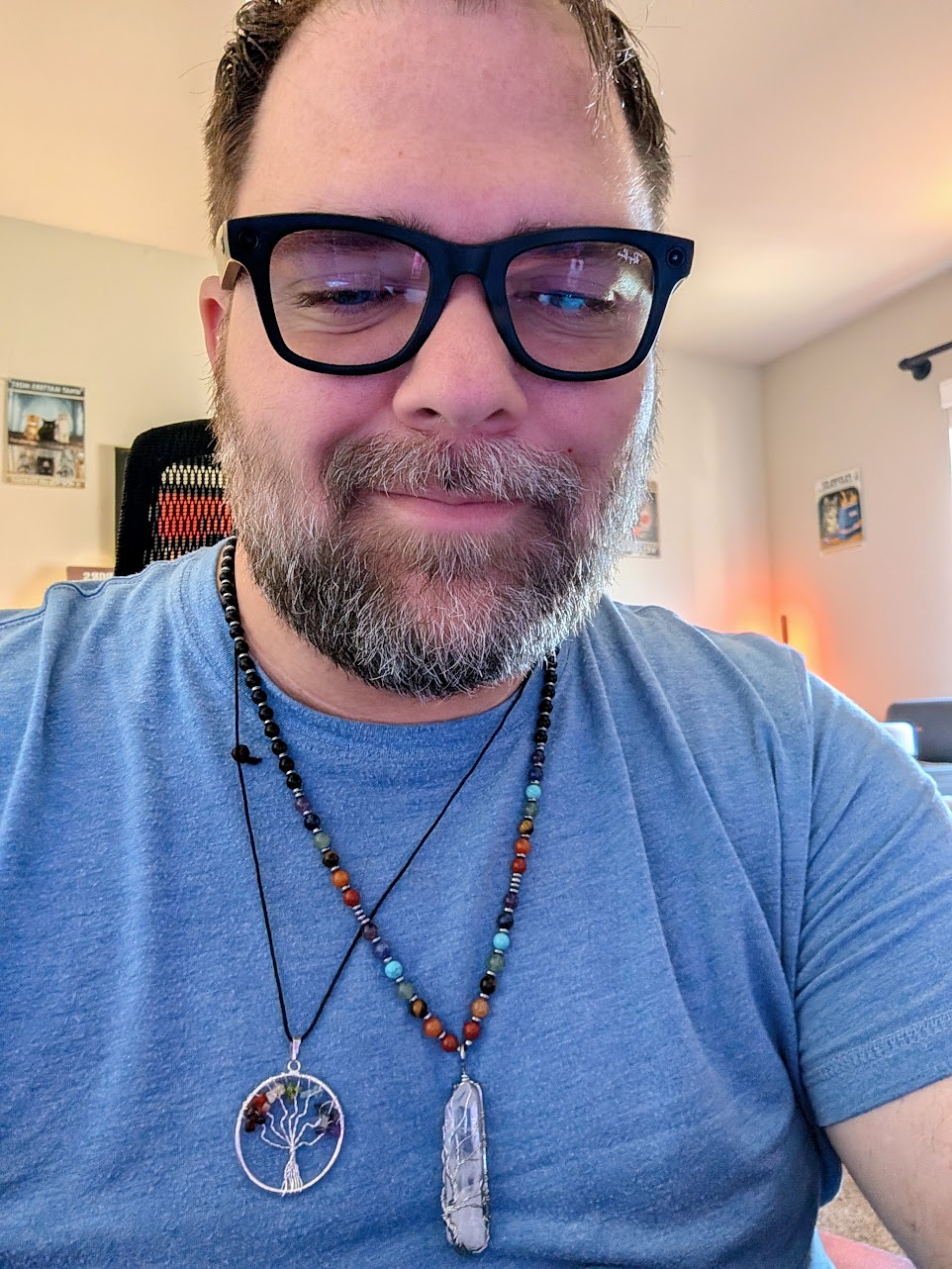
Chase Hunter Richardson
CEO & Principal Consultant · ChaseRich LLC
AI · Automation · Cybersecurity · Training · Teaching
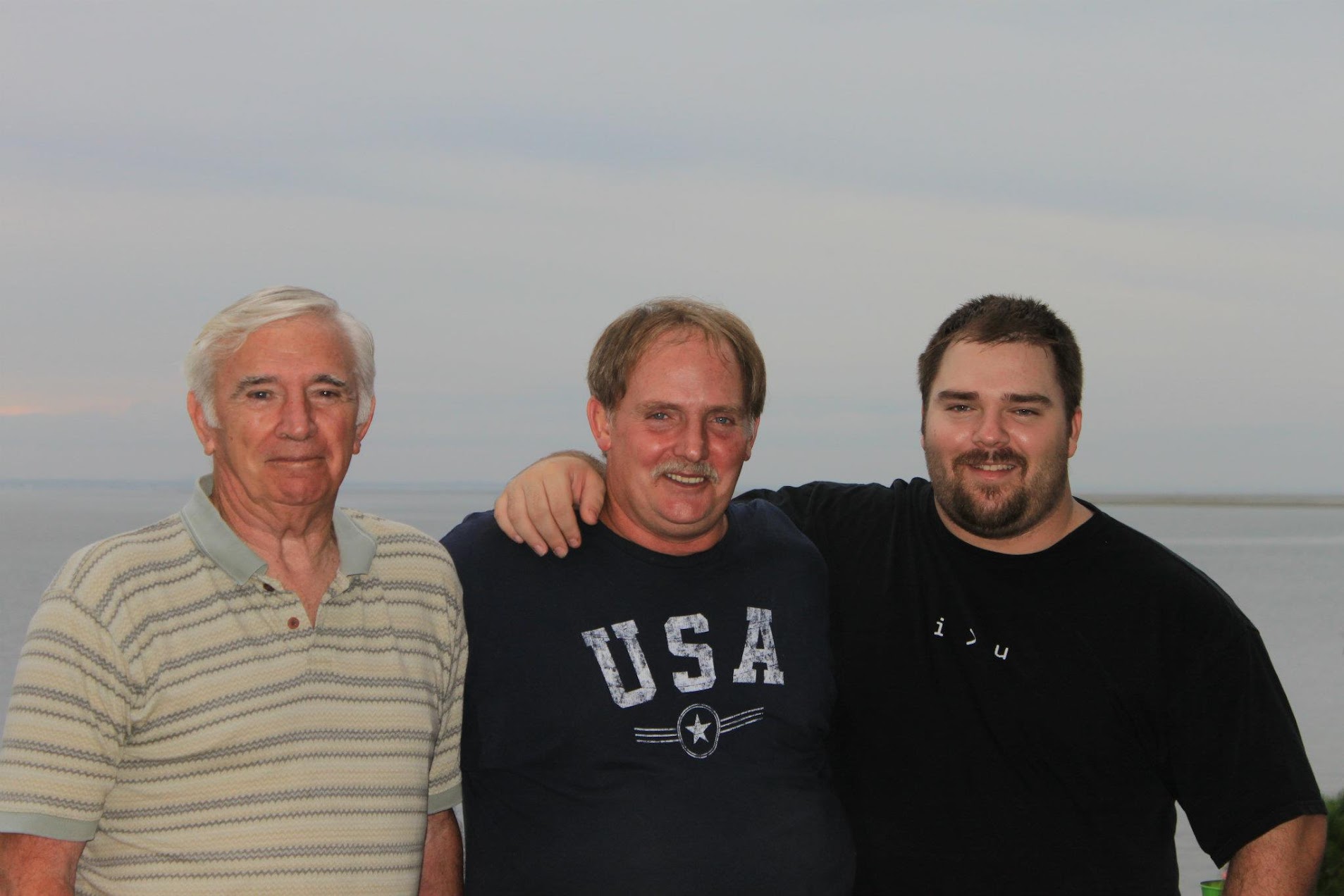
I’m a cybersecurity leader, AI entrepreneur, and self-taught technologist who built this career from the ground up. The work runs in the family. My grandfather, James Robert “Big Jim” Richardson, served in the United States Air Force for 21.5 years. He began his career in 1951 in Korea, where he was stationed and worked as a flight mechanic in a B-29 squadron. He went on to serve as a flight engineer and flew countless missions to Vietnam. After retirement from the Air Force he took a position at the Naval Air Propulsion Test Center in West Trenton, where he was responsible for specialized engine testing for 20 years. A tree has been planted for Big Jim in the NC Game Lands, next to a tree for his wife and my grandmother, Norma Joyce Richardson. Joyce and Jim, along with my Dad, Randy, helped raise me during my formative years. Randy ran Construction by Richardson, and that is where I got my start learning what hard work was as young as 8, picking up nails on roofing jobs and hauling wood and nails out from post-demo work. In the early 1990s, his work took the family to Bermuda for a stretch; he was building bomber hangars at NAS Bermuda before the base closed in 1995. My amazingly strong and resilient father Randy taught me that how I carry myself is half the work, and that strength is not just physical: strength of character, morals, ethics, and values matter just as much or more.
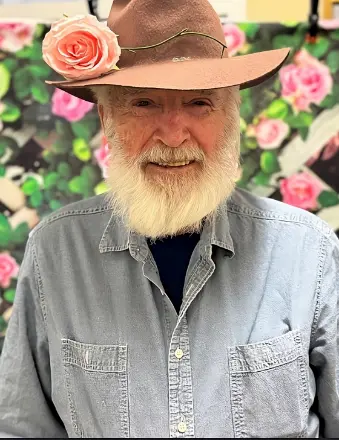
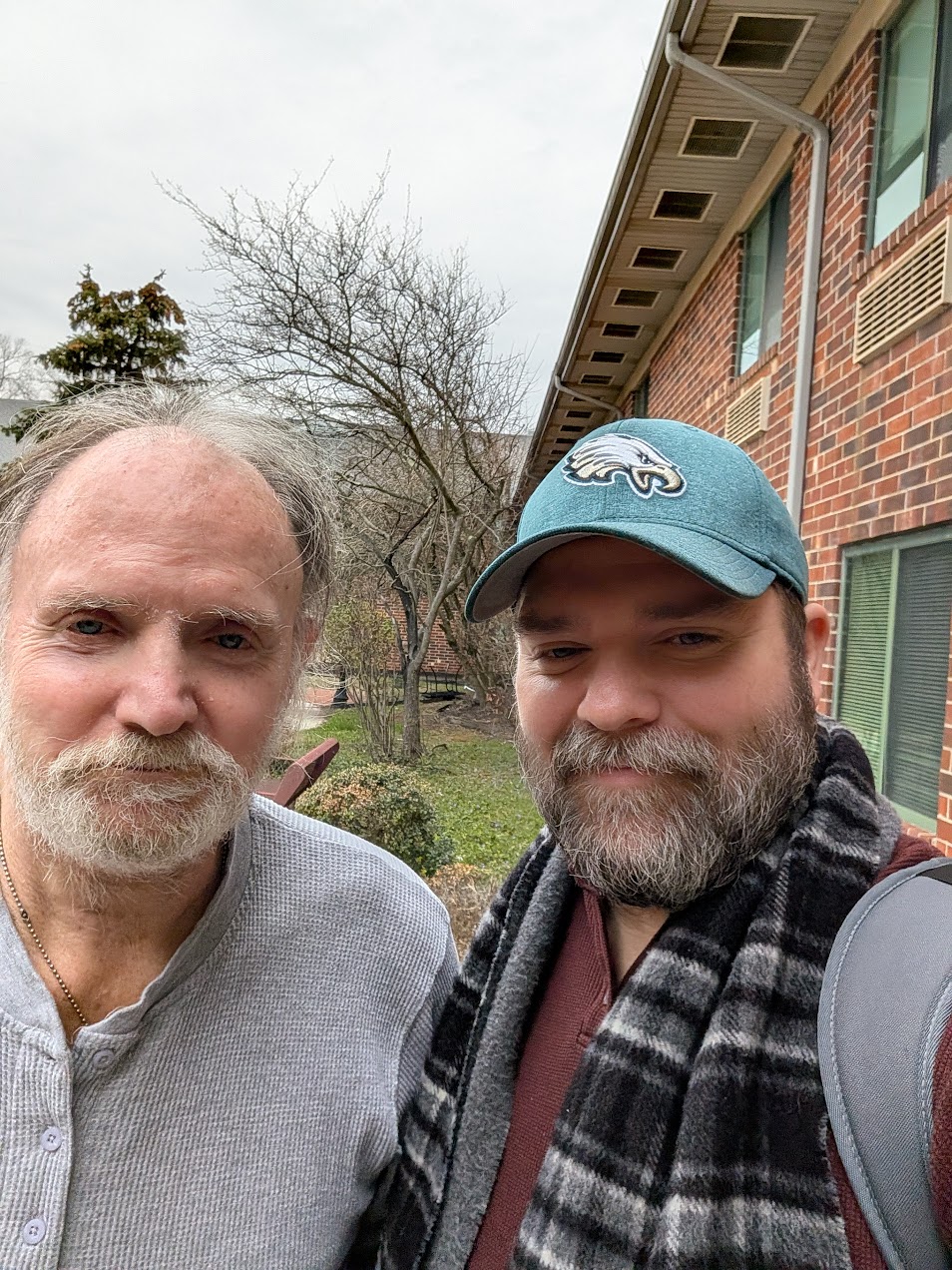
The other side of that tree runs through my mother, Lori, and her father, my grandfather Larry Dee Louck. I called him Poppy. He was a veteran, a disabled one, and the kind of man a whole community turns out for. He was an Elk, a Moose, an American Legion and DAV man, and at his Celebration of Life the room was full of people who spoke about him like he had carried them. He was warm in a way that never needed many words. He signed his emails "Do it to it" and "Love ya allot," and he meant both. After he retired he did not sit still, he took a job as a janitor at a local school, and he told me once that he really did not mind the worst days, because the best days made them well worth it. He spent his last years as the keeper of our history, quietly building the family tree on Ancestry, obsessed with Grandma's side, chasing down names the rest of us had forgotten. Before he passed, in Arizona, he handed that tree to me and told me to keep building it for my nephews, his great-grandchildren, because they are what it is all about. Poppy did the work. I get to carry it forward, for them.
Further back, the line runs through Charles J. Phillips, author of Glass, and my great uncle, Derek L. Phillips, Emeritus Professor of Sociology at the University of Amsterdam, whose publications include the 1971 methodology classic Knowledge from What? Theories and Methods in Social Research and its 1973 follow-up Abandoning Method, two books that said the quiet part out loud: “objective data” gets warped by observer bias, institutional self-preservation, and unexamined assumptions. I did not know either of the Phillipses existed until 2025, and not until 2026 did I begin to grasp the size of the titans they were in their fields. “Highly respected” is an understatement for two men who worked at the pinnacle until death, each published many times over in scientific papers and books.
I come from builders, engineers, researchers, and systems thinkers. After decades of not fully understanding why I saw patterns everywhere, my late diagnoses of C-PTSD, ADHD, and ASD Level 1 helped the remaining pieces click into place. I am, at my core, a systems person: technical systems, human systems, institutional systems, and nervous systems. My work is making those systems easier, safer, and more humane.
The name is part of the inheritance too. My Dad, Randy, originally wanted to name me Forest Hunter Richardson, but he was only given Hunter. I ended up with Chase Hunter, and the etymology, the study of where words come from and what they once meant, lands on "the ever hunting, always chasing, son of a strong king." Strong is one translation; brave and hardy work just as well, since the Old German hart carries all three.
That meaning is not decorative; it explains how I work in real life. Ever hunting means I do not stop scanning for the next gap to close. Always chasing means forward motion is the default. Son of a strong king means I carry the weight without flinching, because the people around me are counting on me to. I only learned what any of this meant at age 42, and I am actively exploring the rest of the family tree now.
2020: When the Playbook Disappeared
I did not become a systems thinker because of AI. I adopted AI because I already was one. The clearest proof is the year nobody had a playbook. By 2020 I was supervising the Conference Support team at ChristianaCare, the people who kept the rooms, cameras, and meetings working across a health system. Then COVID arrived and nearly every normal process stopped working at the same time. Two problems from that year explain how I work better than any job title ever has.
The Graduation That Still Happened
Medical residents spend years earning the day they walk across a stage, and their families spend those same years cheering from a distance. In the spring of 2020, social distancing meant the Internal Medicine residents were about to lose that moment. I could not fix the pandemic. I could help make sure they still had their day.
The executives approved it. The people who made it happen were the leaders in Internal Medicine and the Chief Residents, every one of them absolutely phenomenal, and some of them I now call friends for life. Together we worked out a ceremony that could happen safely: each resident walked onto the stage alone, received their coat, and had their photo taken, while the whole thing streamed live so families could watch from wherever they were. Our conferencing gear was never built for broadcast, so we improvised. Conference cameras and microphones were pressed into service, the production ran through Zoom, and Zoom relayed to YouTube. The audio had rough patches, and I am not going to pretend otherwise. It was a workable, accessible live ceremony built under constraints nobody had planned for. On June 5, 2020, it happened.
At the back of the room sat what I still call the FrankenStudio, a small recording setup built from real production gear, cardboard, acoustic foam, and more tape than I would like to admit. Improvised and inexpensive, and it worked. The residents came through one at a time to record their own messages for the production.
What they did not know was that we had quietly invited their families to send videos too. My team and I cut those messages into montages, and as each resident reached the stage, the people who loved them appeared on screen to cheer them on. Parents, partners, kids, and grandparents celebrating a milestone from living rooms they could not leave. If I had to keep one part of this story and lose the rest, that is the part I would keep.
To pull it off I taught myself more video production than I had planned on, including Adobe After Effects for the lower thirds, logo bugs, and other broadcast-style graphics. Afterward the studio took on a second life. During the pandemic, when reporters could no longer come to us, ChristianaCare executives, including the CEO, used it for remote appearances with Forbes and Fox Business. As I remember it, more than one production team asked us to dial the quality back because our remote feed looked and sounded cleaner than their own studio. The network hosts were in their studios and our executives were in ours, which happened to involve cardboard. Being asked to make a homebuilt setup look less polished remains one of my favorite notes.
A Million Problems, Millions of Scrubs
Around the same time, another large conference room had been turned into a warehouse for disposable scrubs. My recollection is that the count ran into the millions of pairs. What did not exist was a workflow for tracking them: what came in, what went out, what was left, and in which sizes.
It was not my department’s problem. I built a workflow anyway. I defined barcode identifiers for each combination of size, color, and style, repurposed a barcode scanner and a laptop from IT, and put together a process the staff on the floor could actually use to record inventory activity. Microsoft Forms captured each entry, SharePoint Lists held the operational data, Power Automate moved information between the pieces, and Power BI turned it into reports. Along the way I learned Power BI and DAX from documentation and trial and error. I did not particularly enjoy learning DAX. The result was an executive dashboard suite for my SVP, who then had it shared with other senior leaders.
None of it was exotic. That was the point. A physical pile connected to structured records connected to management visibility, built from tools the organization already owned, by someone who learned them while solving the problem.
Same Instinct, Different Problems
A graduation and a warehouse have nothing in common except the pattern. Find the human need the existing system cannot meet. Figure out what people actually want, rather than what the old process assumed. Take stock of what is available, learn whatever is missing, build something other people can use, and keep adjusting under real conditions. When the organization sees value, extend it. Between 2016 and 2023 my badge at ChristianaCare said Computer Support Analyst, then Lead Conference Support Analyst, then Conference Support Supervisor, and none of those titles described the edges of the work, which crossed IT, communications, clinical operations, executive support, and supply chain. The human outcome was always the objective. Technology was the means. And all of it happened years before I had an LLM to argue with about syntax.
The Same Brain, New Tools
The tools changed after 2020. The brain did not. In 2024 I moved into healthcare cybersecurity and identity and access management at Guthrie, first as an IAM Analyst, then IAM Supervisor, then Interim Cybersecurity (GRC + IAM) Manager. The problems looked different on the surface: PowerShell and Python admin tools, Active Directory user-lifecycle automation for joiners, movers, and leavers, reconciling identity and access data across systems, MFA and SSO, and the auditable reporting that lets a team see its own work. I also built Power BI dashboards for executive leadership that made our third-party ticketing system’s metrics understandable for the first time; before that, it was a black box. With dashboards and reports dedicated to reopens, common themes and issues, and more, the team used them to drive process and performance improvements. Underneath, it was the scrubs room again. Find the fragile, labor-intensive process, replace it with something reusable and visible, and hand it to the people who need it.
Evolution, Not a Miracle
Today, through ChaseRich LLC, I apply that same approach to AI and automation: healthcare and identity tooling, AI agents and multi-agent architectures, workflow orchestration and tool integrations, and personal knowledge-management systems. Current.help is a working wellness companion for logging personal observations alongside biometric data; it helps a person notice their own patterns, and it makes no clinical claims. The cognitive exocortex, external memory and executive-function workflows for a brain like mine, is still prototype and research. I learned DAX, Power BI, and video production from documentation and practice. I now use AI to accelerate learning, analysis, development, and iteration. AI gave new leverage to capabilities I had already demonstrated without it. Evolution, not a miracle.
One Sunday, One Shot
Current.help is a good example of what that leverage looks like now. It came out of a conversation with a friend, who is non-binary and neurodivergent, about how much they hated juggling nine different apps to track things when all they wanted was a better overall picture. On Sunday, January 11, 2026, I spent about 30 minutes writing the prompt, fired it off in one big shot, and then spent another 30 minutes watching agents turn that PRD into a usable site. A few hours start to finish. It has helped me tremendously this year, and I have edited it very little since.
Different Problems, Consistent Engineering
The graduation was about preserving a human milestone. The scrubs were about reliable logistics and visibility. Five months into my time at Guthrie, on July 19, 2024, the same instinct got its hardest test yet: timely recovery so patient care could resume. Different problems, consistent engineering. That story is below.
Calm Under Fire
On July 19, 2024, the day eight and a half million Windows machines blue-screened from a faulty CrowdStrike Falcon update, I assisted hospital teams in Pennsylvania and New York from my home office in Delaware as part of an org-wide response. My three tracks: helping critical care staff back online by voice so patients could move off paper downtime procedures faster, helping C-Suite and Physician Executives get their PCs, Laptops, and Surfaces back online over Microsoft Teams while projected onto their conference-room TV, and iterating remote-recovery automation. Leadership commended the technical execution and even more the demeanor. That day also built a new level of camaraderie amongst the many teams who, under tremendous pressure, worked together to meet the common goal of resuming patient care as quickly and safely as possible.
Affiliation
ChaseRich LLC
I enjoy communicating with people from all around the globe, and I will respond at my convenience.
Making AI and cybersecurity easier for everyone.